Why a DNS lookup can reveal more than necessary
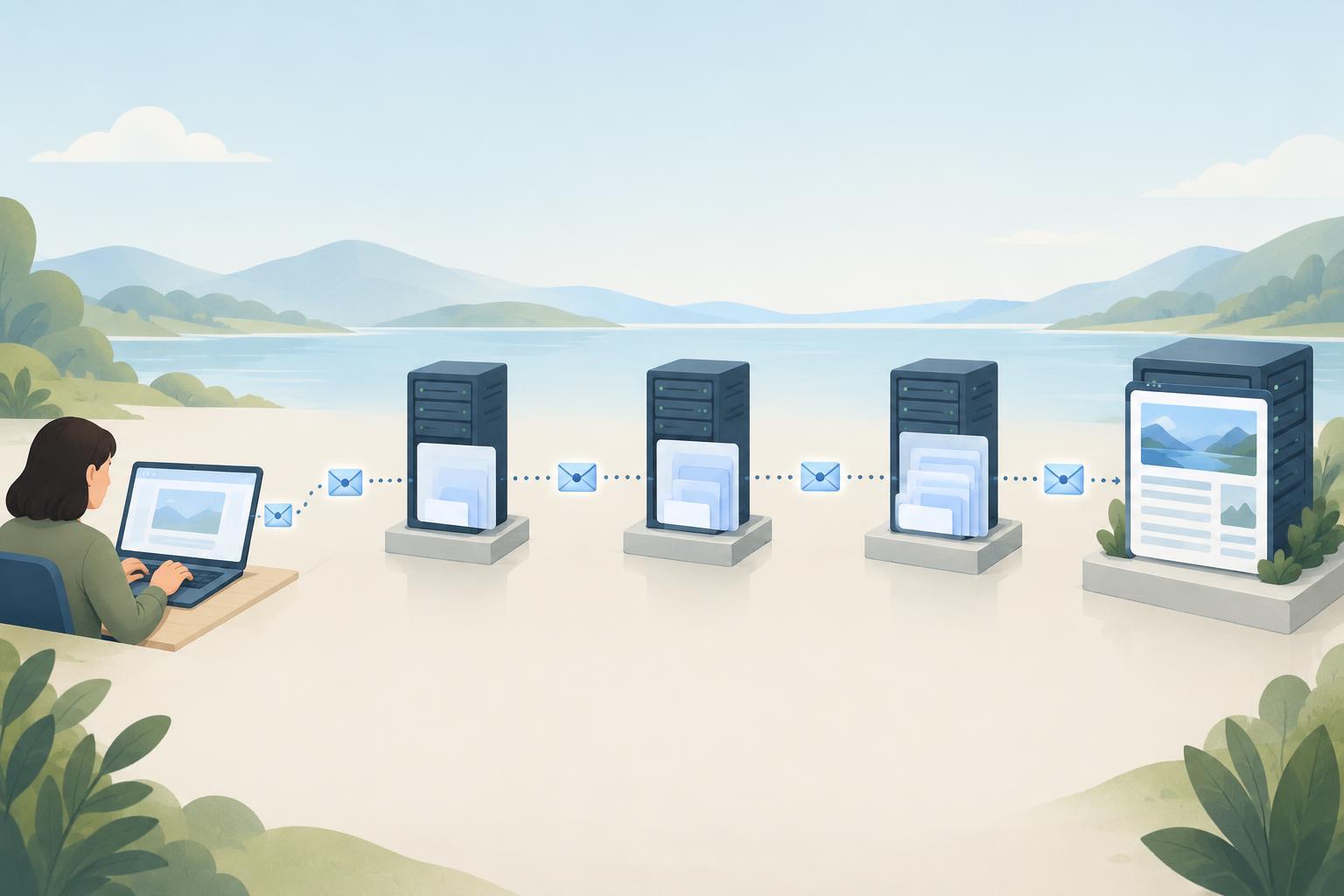
When you enter a name such as www.shop.example.com, your device usually asks a recursive DNS resolver to find its address. If the resolver does not have a usable answer cached, it follows a chain of DNS referrals. It may ask a root server which servers handle .com, ask a .com server which servers handle example.com, and then ask the appropriate authoritative server for the address of www.shop.example.com. Additional steps may be needed if a subdomain has been delegated or the answer points to another name.
The root and .com servers do not need the complete website name to provide their referrals. They only need enough of the name to identify the next place to ask. Without QNAME minimization, a resolver may nevertheless include the full queried name in requests to those servers. That can expose details such as a service or host label to operators whose role is only to direct the resolver onward.
What QNAME minimization changes
QNAME stands for query name: the domain name included in a DNS question. With QNAME minimization, a recursive resolver asks each server about only the portion needed for the next step. For www.shop.example.com, it can ask a root server about .com, then ask a .com server about example.com. Once it reaches a server responsible for the relevant domain, it can ask for the full name and the required record type, such as an A or AAAA address record.
Think of it as asking for directions one junction at a time rather than giving your full destination to everyone along the route. The resolver still has to know the destination, and the server that can answer for it will generally see the full name. Minimization reduces unnecessary disclosure to servers earlier in the referral chain; it does not make the lookup anonymous.
The exact questions can vary. A resolver might already have some referrals cached and skip parts of the chain. A delegated subdomain can add another step, and a resolver may adjust its questions when encountering an unusual DNS setup. The useful principle remains the same: share only as much of the name as is needed to find the next authoritative server.
Where the privacy benefit ends
QNAME minimization applies to how a recursive resolver talks to other DNS servers. It does not, by itself, hide the query from that resolver. If your device sends a DNS request to a network provider’s resolver, that resolver still receives the name it has been asked to look up. Other parties may also learn about a connection through mechanisms outside this part of DNS.
Nor does minimization encrypt DNS traffic. Encrypted DNS transports, where available and configured, address a different concern: protecting queries on a network link. DNSSEC also serves a different purpose by helping a validating resolver check the authenticity of DNS answers. These measures can complement one another, but none substitutes for the others.
Even with minimization enabled, authoritative servers need enough information to answer requests for names they serve. DNS behavior can also disclose information through repeated queries, unusual record requests, or delegation patterns. QNAME minimization is best understood as reducing avoidable exposure during referral lookups, not as a guarantee that no one can infer which site you intend to visit.
How to use it in practice
If you operate a recursive resolver, check its documentation for a QNAME minimization setting and its supported behavior. Many resolver implementations provide the feature, but defaults and compatibility options can differ. After changing a setting, test ordinary lookups and any domains important to your network. Incorrectly configured authoritative DNS can sometimes require a resolver to retry with less-minimized questions to complete a lookup.
If you use a resolver provided by a network, device, or DNS service, its operator controls whether it minimizes queries during recursion. A device setting that changes which resolver you use does not necessarily tell you how that resolver contacts root, top-level-domain, and authoritative servers. Look for a clear description of the resolver’s behavior rather than assuming that an encrypted connection to it also implies QNAME minimization.
For most people, the main takeaway is simple: a recursive resolver should not need to tell every server in the DNS chain the complete name you requested. QNAME minimization makes that restraint part of the lookup process while preserving the referrals needed to reach an answer.