Why DNS answers need a way to be checked
DNS translates a domain name into information that helps software find a website, deliver email or discover another service. A resolver asks DNS servers for records and passes the answers back to an application. Without an additional verification mechanism, a resolver may have limited ability to tell whether an answer was altered on its way from the authoritative DNS server. A forged answer could point someone toward the wrong destination.
DNS Security Extensions, or DNSSEC, add digital signatures to DNS data. The owner of a signed DNS zone publishes information that lets a validating resolver check whether an answer matches data signed by that zone. DNSSEC is designed to protect the integrity and origin of DNS answers. It does not decide whether the destination in a valid answer is safe.
What a successful DNSSEC check tells you
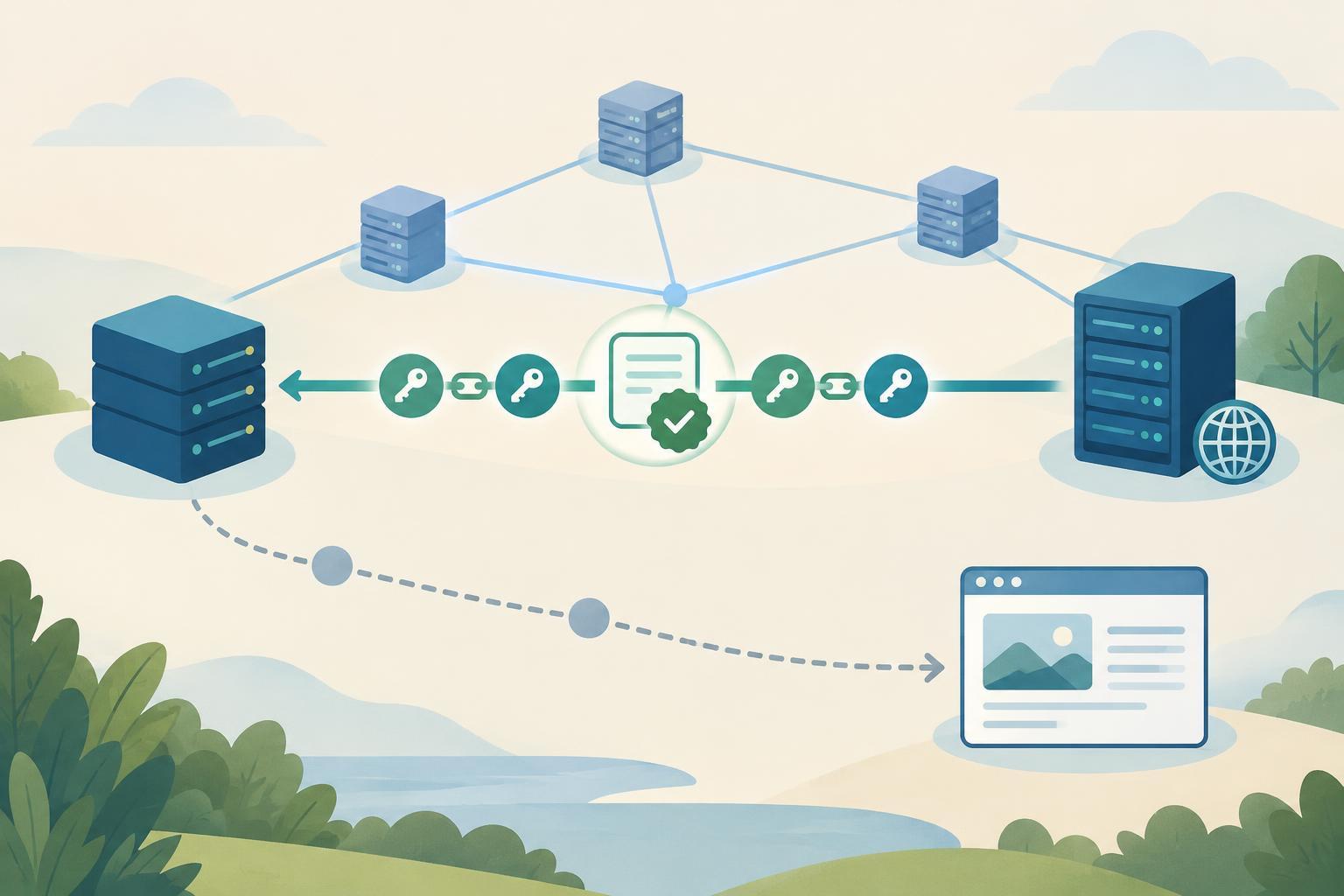
A validating resolver checks signatures using the zone’s published DNS keys. For a signed domain, it can also follow a chain of trust: the parent zone publishes a DS record that links to the child zone’s key, and the resolver works back toward a trust anchor it already accepts. If the expected signatures and links check out, the resolver can treat the DNS answer as authenticated. DNSSEC can also provide signed proof that a requested record or name does not exist.
For example, if a domain’s signed zone says its www host points to a particular address, validation helps detect an attacker’s attempt to replace that answer in transit. The protection applies to the DNS data being validated, not to the content served at that address. It also depends on the resolver actually performing validation; publishing signed records alone does not force every device or DNS service to check them.
Important limits: privacy, websites and email
DNSSEC does not encrypt DNS queries or answers. Someone able to observe ordinary DNS traffic may still learn which names are being looked up. Encrypted DNS transport, where available and configured, addresses a different problem: protecting traffic between a device and its DNS resolver. It does not replace DNSSEC’s checks on signed answers.
A valid DNS answer is not a guarantee that a website is legitimate, that its connection is encrypted or that its content is harmless. An attacker who controls a domain can sign malicious DNS records for it. DNSSEC also does not prevent a legitimate domain administrator’s account from being misused to change records. Website connection security and account protection require separate measures.
Email has similar boundaries. DNSSEC can help a validating resolver check signed MX and other DNS records used during mail delivery, but it does not by itself encrypt messages, verify the human sender or stop spam. SPF, DKIM and DMARC have different roles in email authentication; their presence in DNS does not make them substitutes for DNSSEC.
Why enabling DNSSEC takes coordination
DNSSEC involves both the authoritative DNS provider, which signs the zone, and the domain’s parent zone, which typically receives a DS record through the registrar. These pieces must match. If a DS record points to a key the authoritative zone no longer uses, a validating resolver may reject answers even though the domain’s ordinary records appear correct. To visitors using that resolver, the website or email service may seem unavailable.
This is especially important when changing DNS providers, moving a domain or rotating signing keys. Before making a change, identify who manages the signing keys and who manages the DS record. Follow a planned sequence that keeps the chain of trust valid while changes propagate, and verify the result with a DNSSEC-aware lookup tool. Avoid copying a DS value from an old setup into a new one without checking that it corresponds to the active signing key.
How to think about DNSSEC in a security plan
Treat DNSSEC as a way to authenticate DNS answers, not as a complete domain-security package. It is useful when a validating resolver needs to detect tampered records or false claims that a signed name does not exist. It is less useful if validation is absent, and it cannot repair incorrect information that an authorized administrator has published.
If a signed domain suddenly fails to resolve for some users, compare results from validating and non-validating resolvers. A difference can point toward a signature, key or DS-record problem, though other causes are possible. Check the authoritative records and the parent’s DS record before changing settings. Alongside DNSSEC, keep domain and DNS accounts protected, review record changes, and use appropriate connection and email safeguards. Each measure covers a different part of the path between a name and the service people expect to reach.